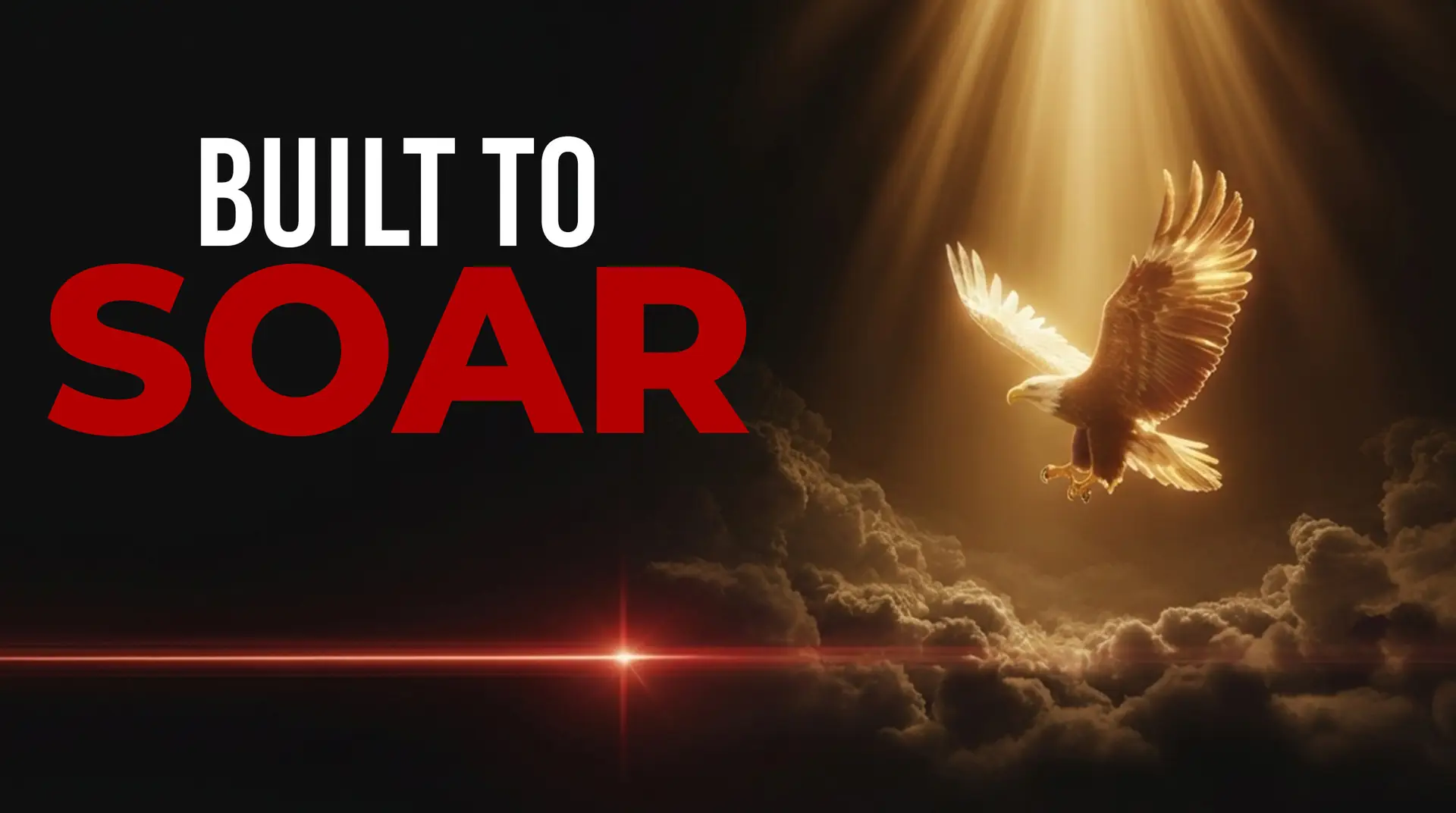

“Even youths grow tired and weary, and young men (women) stumble and fall; but those who hope in the Lord will renew their strength. They will soar on wings like eagles; they will run and not grow weary, they will walk and not be faint.” (Isaiah 40:30-31 NIV)
I want to be direct with you about something before we dive in. Leadership is not reserved for the person with the title. It is not exclusive to the corner office, the stage, or the boardroom. True leadership is an expression of purpose. And if you are serious about answering your Calling and building work that actually aligns with who you are and what you were created to do, then the traits we are about to discuss are not optional. They are required.
I believe that truly effective leaders are developed. Yes, some people carry innate leadership abilities. But even those individuals still require a development process to bring those abilities to full strength. Raw talent without intentional cultivation will only take you so far. Development is what takes you the rest of the way.
I also believe there is a direct and undeniable correlation between purpose and leadership. The traits that define true leaders are the same traits that must exist in anyone who successfully walks in their Calling. You cannot build what your Calling demands while operating at a low level of personal development. It does not work that way. Greatness requires a standard of character and discipline that has to be practiced until it becomes second nature.
So where do we look for that standard? I want to take you to one of the most remarkable creatures in the natural world: the eagle. Eagles are not ordinary birds. They are built differently, they think differently, they operate differently, and the parallels between how they live and how effective, purpose-driven leaders must live are striking. Study eight traits of the eagle closely, and you will find your blueprint for called leadership.
1. Faithfulness
Throughout its life, an eagle maintains a single home and a single partner. The eagle’s mate can depend on it completely. If the eagle is alive, it will be present. That kind of faithfulness is rare, and it is powerful.
From a human perspective, true leaders are faithful. They are dependable. They are trustworthy. When they make a commitment, they honor it. Their word is not a suggestion; it is a contract.
Take a serious look at the commitments in your own life. Your health commitments. The promises you make to your children, your partner, your colleagues, your team. Are you keeping them consistently? Can the people around you count on you the way the eagle’s mate counts on it? Where there are gaps, close them. Faithfulness is the foundation on which everything else is built.
2. Focus
Once an eagle has locked onto its prey, it does not look away. It does not get distracted. It does not change course. As far as the eagle is concerned, the moment it fixes its gaze, the outcome is already decided. The prey is as good as caught.
Successful leaders operate with that same level of locked-in focus. For them, the vision is not a wish. It is a target. And everything that does not move them toward that target gets removed from the equation.
Look at your plate right now. Be ruthless about it. If something is not advancing your progress toward the vision your Calling demands, it needs to go. This can be uncomfortable. But the goal is to eliminate the excess so you are free to give full attention to what actually matters. Distraction is the enemy of purpose, and focus is its antidote.
3. Sharp Vision
Eagles have extraordinary eyesight. They can identify and track prey from distances that would be invisible to the human eye. That long-range vision allows them to plan their approach and execute before the prey even registers the threat. By the time the prey sees it coming, the eagle has already won.
Leaders must carry that same kind of sharp, forward-thinking vision. They have to be able to see clearly where they are going before they get there, so they can build the game plan that gets them there with precision.
If you are not a planner, start today. Begin small if you need to. Create a grocery list before you go to the store. Block your schedule for the week ahead. Build toward the point where your time is intentionally mapped and your actions are consistently directed by a plan. What works well for me is planning the upcoming week every Sunday. It brings clarity, reduces wasted time, and keeps everything pointed in the right direction. Vision without a plan stays a dream. A plan gives the vision legs.
4. Selective
Eagles are exceptionally selective about what they eat. They will not consume prey that they did not kill themselves. The prey must be alive, warm, and active. Eagles do not eat dead things.
That principle translates directly into the way effective leaders manage their inner circle. True leaders are strategic about who they allow close access to their vision, their energy, and their time. They actively seek people who bring life into circumstances, people who are moving, growing, building, and contributing. They do not surround themselves with those who are negative, stagnant, or destructive.
This is a hard one for many people, but it is one of the most important steps you will take. Set aside real time to take inventory of the people in your inner circle. Where are they going? What are they building? What kind of energy do they deposit into your life on a consistent basis? Once you have that honest picture, make the necessary decisions. Not everyone is meant to go with you into the next level. Protecting your circle is not arrogance. It is stewardship of your Calling.
5. Courageous
Eagles do not assess the size of their prey before deciding whether to attack. They do not calculate whether the opponent is larger, stronger, or more intimidating. They simply go. That fearlessness is not recklessness; it is confidence rooted in who they are and what they were built to do.
Purpose-driven leaders must carry that same courageous posture. They tackle the big challenges one piece at a time. They do not allow past failures, past criticism, or the sheer size of the obstacle to stop their forward movement. They keep going.
The goal is to reach a place of genuine security and confidence in who you are and what you are called to do. When you are grounded in that identity, fear loses its grip. You can face what is in front of you and push through it, not because it is easy, but because you know you were built for it.
6. Persistence
Eagles have a unique and extraordinary relationship with storms. While every other bird runs for cover when a storm approaches, the eagle flies directly into it. It does not hide from the wind. It uses the wind. The eagle adjusts its wings, catches the current, and rides the storm to higher altitude. It ends up soaring above the very thing that drove everything else to the ground.
That image should become a fixture in how you think about the difficult seasons of your life. Every person will face storms. Most people get slowed down or completely stopped by them. But called leaders develop the capacity to use storms as tools. They look for the growth inside the difficulty. They ask what the storm is producing in them rather than what it is taking from them. Joyce Meyer put it plainly: there is value in the storm.
The next time you find yourself in one, resist the urge to simply survive it. Look for the value. Find the lesson. Use the pressure to sharpen you and elevate your positioning. The storm is not your enemy. It is your next launching pad.
7. Nurturing
Here is a trait that surprises people when they learn it about eagles. Despite being one of the most powerful and fierce birds in the natural world, eagles are extraordinary caregivers. The mother eagle knows precisely when her eaglets are ready to learn to fly. She carries them high into the sky on her back and then shifts out from under them, forcing them to fall and discover what their wings can actually do. She watches closely, swoops back under them before they hit the ground, and repeats the process until they get it. If an eaglet is a slow learner, she takes it back to the nest and then tears the nest apart, removing every comfort and soft material until there is nothing left for the eaglet to settle into. The message is clear: it is time to fly.
Great leaders nurture their teams in the same way. They do not just manage people; they develop them. They teach, train, challenge, and push those around them toward levels of capability and confidence those people may not yet see in themselves. They prepare their team to fly solo, to lead their own assignments, and to reach heights that they could not reach without intentional development. If you lead people in any capacity, your job is not just to get the work done. Your job is to build the people who do the work.
8. Resilience
The eagle’s final lesson may be its most powerful. Around thirty years into an eagle’s life, its body begins to deteriorate. The calcification that forms on its wings slows its flight. Its claws lose flexibility, making it harder to catch prey. Its beak grows dull, reducing its ability to tear and eat. At this point, the eagle is no longer operating at the level it was designed for.
Here is where most creatures would simply decline. The eagle does something different. It retreats to the mountaintop and begins a painful, deliberate transformation. It beats its beak against the rocks until the beak falls off. It pulls out its own claws. It removes its feathers. Everything that has become calcified, dull, and limited gets stripped away. Then it waits. Everything grows back. Renewed. Stronger. And the eagle lives and soars for another thirty years.
That is resilience. Not just surviving hardship, but actively choosing to shed what is no longer serving you so that something stronger can emerge.
Called leaders do the same. They are constantly seeking personal growth. They feed their minds through books, courses, mentors, seminars, and every available tool for development. The late Dr. Myles Munroe reportedly read four books every month. That may not be your pace, but the principle applies: you cannot afford to become obsolete. The world is changing. Your Calling requires that you keep growing. The level of your development is a direct reflection of how seriously you take what you were built to do.
One book a month. One seminar a quarter. One mentor who challenges you to think bigger. Start somewhere. Keep going. Stay sharp.
These eight traits are not reserved for the famous, the credentialed, or the naturally gifted. They are available to every person who is willing to develop them through daily practice and intentional commitment. If you are serious about answering your Calling and building what it demands, start here. Study the eagle. Then go become one.