
I will be honest with you. Every time I sit down with an entrepreneur or small business owner and discover they have never heard of The E-Myth by Michael Gerber, I am genuinely astonished. Not because I expect everyone to have read every business book on the market, but because this particular book addresses a problem that is so widespread, so quietly destructive, and so perfectly positioned at the intersection of entrepreneurship and purpose that its absence from most entrepreneurs’ reading lists is a real gap.
If you are building a business as an expression of your Calling, this book needs to be on your shelf, and more importantly, in your practice.
Let me tell you why.
The Myth That Is Destroying Your Business and Your Calling
The title says it all, once you understand what the “E” actually represents. It stands for entrepreneurship. And Gerber’s central argument is that most of what we believe about entrepreneurs is a myth. The popular image of the entrepreneur is bold, visionary, fearless, someone who walks away from the conventional world to build something extraordinary on their own terms. That image is inspiring. It is also largely inaccurate.
The reality Gerber found after years of research, study, and working with more than 25,000 small business clients through his company E-Myth Worldwide, is far less glamorous. Most people who start businesses are not visionary entrepreneurs in the truest sense. They are technicians who got fed up. They were good at their craft, whether that was baking, coaching, consulting, designing, or any other skill, and at some point, something snapped.
Gerber calls it the Entrepreneurial Seizure.
Maybe it was a Friday afternoon paycheck that did not feel like enough. Maybe it was a sideways glance from a boss who did not seem to appreciate what was being contributed. Maybe it was a birthday, a graduation, a random Tuesday when something inside shifted and the thought became undeniable: I could do this better on my own.
And so they left. They launched. They became business owners.
The problem is that being excellent at a skill and being equipped to run a business built around that skill are two entirely different things. The technician who was brilliant in someone else’s company now finds themselves doing all the technical work, handling all the operations, managing all the relationships, and somehow also trying to grow the business. They did not escape the job. They just created a harder one, and this time, there is no guaranteed paycheck at the end of it.
Sound familiar?
The Three Personalities Inside Every Entrepreneur
One of the most clarifying frameworks in the book is Gerber’s concept of the three personalities that exist inside every entrepreneur: the Entrepreneur, the Manager, and the Technician.
The Entrepreneur is the visionary. This is the part of you that sees what could be, imagines the future, and thrives on possibility and innovation. The Entrepreneur is energized by big ideas and uncomfortable with the routine.
The Manager is the pragmatist. This is the part of you that craves order, systems, and predictability. The Manager wants processes in place, results that are measurable, and a structure that keeps everything running smoothly.
The Technician is the doer. This is the part of you that loves the actual work. The Technician wants to put their head down, execute the craft, and produce quality results. The Technician is happiest when working, not managing or strategizing.
Gerber argues that most small business owners are dominated by the Technician personality, with just enough Entrepreneur to have started the business in the first place, and not nearly enough Manager to keep it running well. The result is a business that is entirely dependent on the owner’s personal output. If the owner stops working, the business stops producing. That is not a business. That is a self-employment trap.
And here is where it connects directly to your Calling. If you are building a business as the vehicle for what you are called to do, but the business is consuming every hour of your day with technical work and operational chaos, you are not building your Calling. You are buried under it. Your gifts, your vision, and the impact you were meant to have are being suffocated by tasks that should either be systematized or delegated.
The Solution: Build a Business That Works Without You
The core lesson of The E-Myth is this: stop building a job and start building a business. The difference is systems.
Gerber uses the story of Sarah and her pie shop, All About Pies, to bring this lesson to life in a way that is disarmingly relatable. Sarah loves baking. She is exceptional at it. She opens her shop, and within a short time, she is overwhelmed. The business that was supposed to give her freedom has become the thing she is trapped inside of. Gerber walks alongside Sarah’s journey as a business development coach, teaching her and the reader simultaneously how to transform the way the business operates.
The goal, as Gerber frames it clearly, is to build a business that works predictably and profitably with minimum involvement from you, the owner. That requires systems. It requires thinking of your business less like a collection of tasks and more like a franchise prototype, a model that could be replicated and run by someone else if it needed to be. McDonald’s is his landmark example. McDonald’s did not become a global operation because its founder was the best hamburger maker in the world. It became what it is because it built systems that could be taught, repeated, and relied upon regardless of who was executing them.
That is the standard Gerber challenges every entrepreneur to apply to their own business, regardless of size or industry.
What the Book Covers
The E-Myth is not a vague motivational read. It is a structured business development resource that walks you through the specific strategic components your business needs to operate at a higher level. Gerber covers your Primary Aim, which starts with who you want to be, not just what you want to build. He covers your Strategic Objective, your Organizational Strategy, your Management Strategy, your People Strategy, your Marketing Strategy, and your Systems Strategy.
Each of these areas is addressed in plain, accessible language. There is no MBA jargon, no unnecessarily complex frameworks. Gerber writes the way a trusted advisor would talk to you across a table, clearly, directly, and with genuine investment in your success. That accessibility is one of the reasons this book has remained relevant and impactful for decades.
Why This Matters for Called Entrepreneurs
Here is the thread that ties all of this directly to the Stuck to Called conversation. Many high achievers build businesses that look successful from the outside while feeling completely misaligned on the inside. They are producing, they are generating revenue, but they are exhausted, they are operating predominantly in the Technician role, and the deeper work they feel called to do keeps getting pushed to the side because the business demands everything they have.
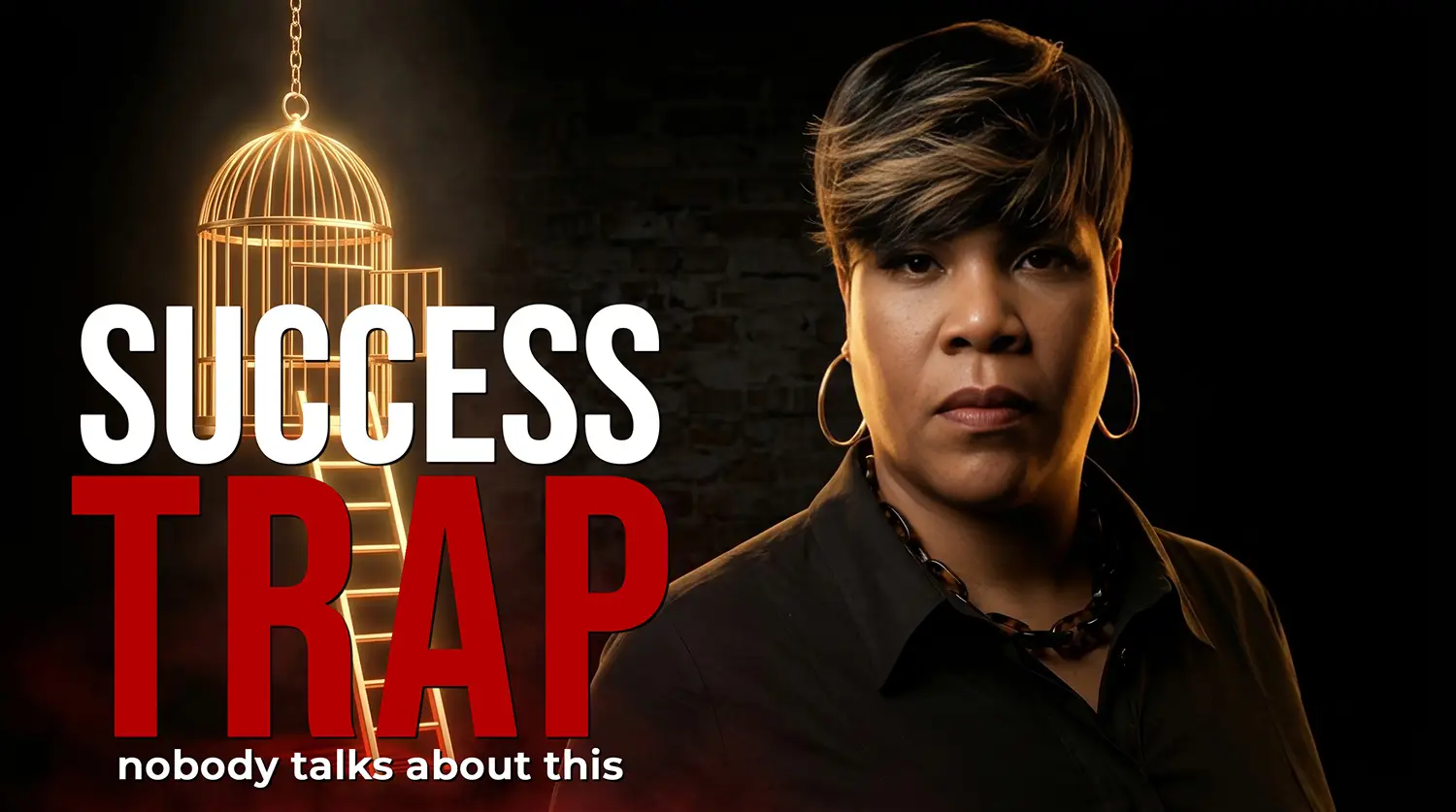
That is not alignment. That is a well-disguised trap.
The E-Myth gives you the framework to get out of that trap. When your business is systematized, when it runs on processes rather than on your constant personal presence, you create space. Space to think. Space to lead. Space to step into the visionary, purpose-driven work that your Calling is actually asking of you.
Building systems is not just a business strategy. For called entrepreneurs, it is a stewardship issue. God provides vision and provision, but humans are responsible for the plan and the action. Part of honoring the Calling is building the infrastructure around it that allows it to grow, sustain, and scale beyond what your individual effort alone can produce.
Pick up The E-Myth. Read it slowly. Implement as you go. And then look honestly at your business and ask yourself: am I building a business, or am I building a job I happen to own?
The answer to that question will tell you a great deal about where you are in your journey from stuck to called.
Book Review: The E-myth Revisited, Why Most Small Businesses Don’t Work and What to Do About It, by Michael E. Gerber
ISBN: 0-88730-728-0 | Price: $16.00
HarperCollins, New York, NY | www.e-myth.com
CLICK HERE to purchase your copy of the book…